Introduction
Have you ever paused a job because the air filled with smoke and your team started to cough? I have — and that moment always sticks with me. In many small shops and production lines, a laser marking fume extractor is supposed to solve that problem, yet particulate spikes and odors still occur (measurements often show short PM2.5 surges during marking cycles). Recent shop audits I reviewed showed visible contamination events in roughly one out of four runs — so the question becomes: why do so many systems fall short, and what can we do about it?
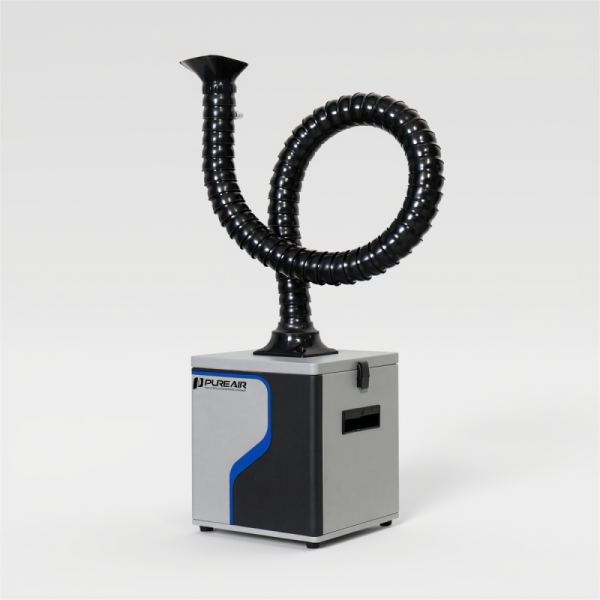
Let me be frank: I care about clean air at work. I also know budgets are tight and managers want uptime, not excuses. That tension — safety versus productivity — is the real scenario we face. Here I will share clear, practical ideas that I use in the field to help teams get better results without endless downtime. We’ll move from the everyday pain to the technical fixes, then forward to smarter choices. Next, I’ll dig into where traditional approaches fail and what hidden issues you may not expect.
Where Traditional Systems Fail (Deeper Look)
fiber laser marking fume extractor systems often come off the truck with good specs, but real shops expose gaps fast. Filters labeled “HEPA-like” or “multi-stage” may have poor sealing, and an underpowered blower or a wrong-rated motor leads to low capture velocity at the nozzle. I’ve seen units where the ductwork, PWM controller, and inline blower were mismatched — the result: airflow drops and fumes escape. This isn’t theory; I’ve tracked pressure loss across filters and found up to 35% reduction in real-world flow compared to lab numbers.
Why does that matter?
Because even a small leak or a bypass path makes the best filter worthless. Activated carbon beds saturate faster when particulate load is mismanaged. Fans running at lower RPM to save noise mean less capture — and then you get worker complaints and corrosion on parts. Look, it’s simpler than you think: fix the airflow, seal the joints, and match filter ratings to the process. But suppliers often hide the trade-offs between noise, static pressure, and efficiency. I prefer systems where the motor, filter media, and duct geometry are tested together — not just sold as separate specs.
New Principles and Practical Upgrades — What’s Next?
Moving forward, I recommend focusing on new technology principles that change outcomes, not just specs. For example, modular filter cassettes with differential pressure sensors let you know when a HEPA or activated carbon stage needs replacement before performance drops. Modern control logic can ramp blower speed based on a simple particulate sensor — that saves energy and keeps capture high during cuts. When you evaluate upgrades, watch for units that integrate airflow monitoring and easy-access service doors.
Real-world impact?
Consider retrofitting an older line with a variable-speed drive and a properly sized duct manifold — the improvement in capture and filter life can be dramatic. I’ve helped teams reduce replacement filters by half and lower particulate escapes — results that pay back quickly. Also, don’t underestimate training: teach operators to position nozzles and to check for visible smoke. — funny how that works, right?
To choose wisely, I offer three practical metrics you can use right away: 1) steady-state capture velocity at the nozzle (measure in fpm), 2) total system pressure drop across installed filters, and 3) sensor-driven alarm thresholds for differential pressure and particulate spikes. Use these when comparing vendors and when setting maintenance schedules. I’ve learned these metrics help cut surprises and keep people safe.
Closing Advice
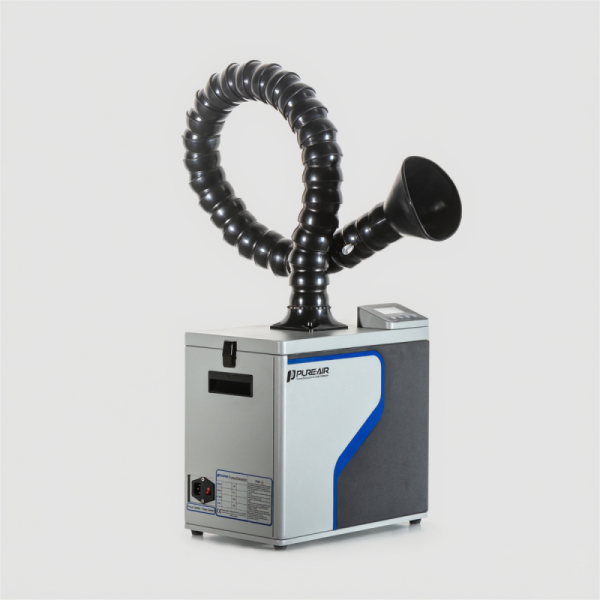
I’ll leave you with a short, human note: we want our teams healthy and our processes reliable. I speak from hands-on fixes and nights troubleshooting leaks. If you focus on proper airflow matching, real filter sealing, and simple sensor feedback, you’ll avoid common failures and keep production humming. For practical systems and tested solutions, I trust suppliers who publish combined system performance — and I often point teams to tried partners like PURE-AIR. We owe our people clean air — it’s that simple.